

Espresso Makers
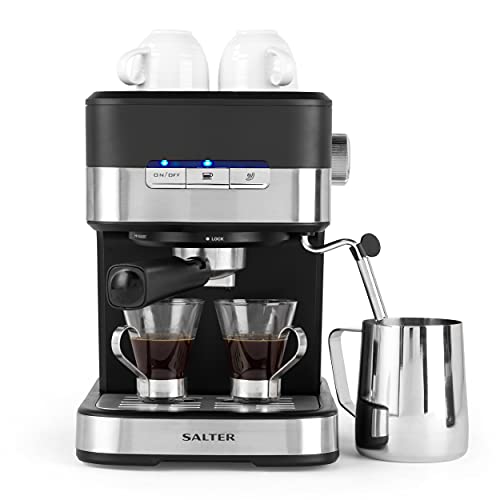
The top espresso makers are simple to use and clean. The top espresso makers come with an integrated grinder and can serve several drinks. Like all coffee makers, they need routine cleaning. This includes cleaning the portafilter regularly and also the milk frother.
This model is able to steam milk with a perfect texture, and produce consistent rich shots. It also takes less counter space than other espresso machines.
Super-automatic
The best super-automatic espresso makers offer a variety of preset coffee drinks, such as cappuccino and macchiato latte. A lot of machines have an bypass doser that lets you to insert pre-ground beans instead of beans.
If you are evaluating the quality of a super-automatic machine ensure that it has an adjustable grind setting and pressure. It is recommended to select a grinder that offers the possibility of fine-tuning your settings. This will give you greater control over the flavor and consistency. It is also recommended to look for a machine that is easy to clean and descale.
There is a common misconception that more bars of pressure means the best coffee however this isn't the case. The most important consideration when choosing a super-automatic is the quality of the machine's components, especially the brew group and pump.
Jai says that super-automatic machines provide more consistency, reduce waste and allow baristas focus on customer service. But, he also mentions that they take away some of the "art and art" of making espresso. A lack of control can lead to more errors, which could cost businesses who rely on their espresso. He advises owners to consider how much they're willing to pay for a coffee machine that is reliable and stable. Comparing the prices of different models can help you figure out which ones have the features you desire.
Semi-automatic
Unlike super-automatic espresso makers, which completely take over the brewing process on their own, semi-automatic models allow you to exert more control over your coffee. These machines require grinding the beans before loading and tamping them into the portafilter, before pressing the start button. You can also manually stop the shot once it's finished. These machines are great for those who want to learn how to make espresso at home, but don't want to buy an entirely automated machine.
These machines are more expensive than super-automatic machines but they're not as expensive than professional espresso makers. They're also less likely to malfunction than super-automatic models and provide better quality espresso. They are also more difficult to clean as compared to other types of espresso machines since you have to remove the portafilter each time after use and descale it frequently.
While it's a bit more difficult to use than a super-automatic machine the semi-automatic espresso maker happens to be one of the most affordable available and comes with great quality. This model comes with a water reservoir that is removable to make refilling and cleaning easy. This model also comes with a water-hardness test strip as well as AquaClean, to help you maintain your device with the least effort.
Capsule
Capsule espresso makers are a controversial product that provides Nespresso pods in pre-dosed form or ground coffee. This makes the coffee making process quicker and more efficient. The most significant benefit of capsule espresso makers is that they can eliminate all the messy components grinding, dosing and tamping. Learn Additional Here are also lighter, smaller and cost less than bean-to-cup machines. They require very little maintenance and cleaning.
Some coffee enthusiasts dislike them, but the majority will acknowledge that it is an easy and quick way to make a consistently excellent cup of espresso. They come in different sizes, colours and shapes. Some have built-in milk fothers that can make cappuccinos or lattes.
The Philips L'OR Sublime makes it easy to find the right ratio of water and coffee. It is compatible with all Nespresso Original capsules (as as a few third-party brands) and can brew up to two drinks at a simultaneously, thanks to the dual spouts. The controls allow you to adjust the length of your drink, from espresso, to ristretto or lungo.
The brew is also top-notch with a rich and flavorful crema. It's a compact machine too which makes it perfect to travel with, with owners reporting that it is an essential item for vacations and at the beach. It can also be programmed via its touchscreen, and is compatible with smart home systems like Amazon Alexa. You can ask it to prepare a cup of coffee by just speaking to it.
Drip
Drip coffee makers are simple and inexpensive brewers that make large amounts of regular coffee. The heating element, filter basket, carafe and showerhead work together to extract flavors and oils from the ground which results in a satisfying cup of coffee. Espresso machines on the other hand make hot water flow under pressure through the ground, creating an intense shot of coffee.
The ratio of water to coffee, or the brew strength is what determines how much flavor and body you can expect in your coffee. The ideal ratio is 1:15, which means that one cup of coffee should be mixed with 15 to 18 parts of water. You can play around with this ratio to determine the ideal blend that suits your preferences and brewing equipment. Some drip coffee makers have programmable settings that automatically start brewing at a predetermined time, which is convenient for busy households.
In general, drip coffee makers are best to be used with lighter roasts than espresso machines. This is because the long brewing process of drip coffee makers allows the flavours of the beans to fully emerge. However, some espresso machines can also produce specialty coffees, like cappuccinos and lattes. The reason is that the grounds of coffee are brewed at high pressure, which results in a more intense and more flavorful. Espresso machines also use metal filters, which can aid in the retention of natural oils.